
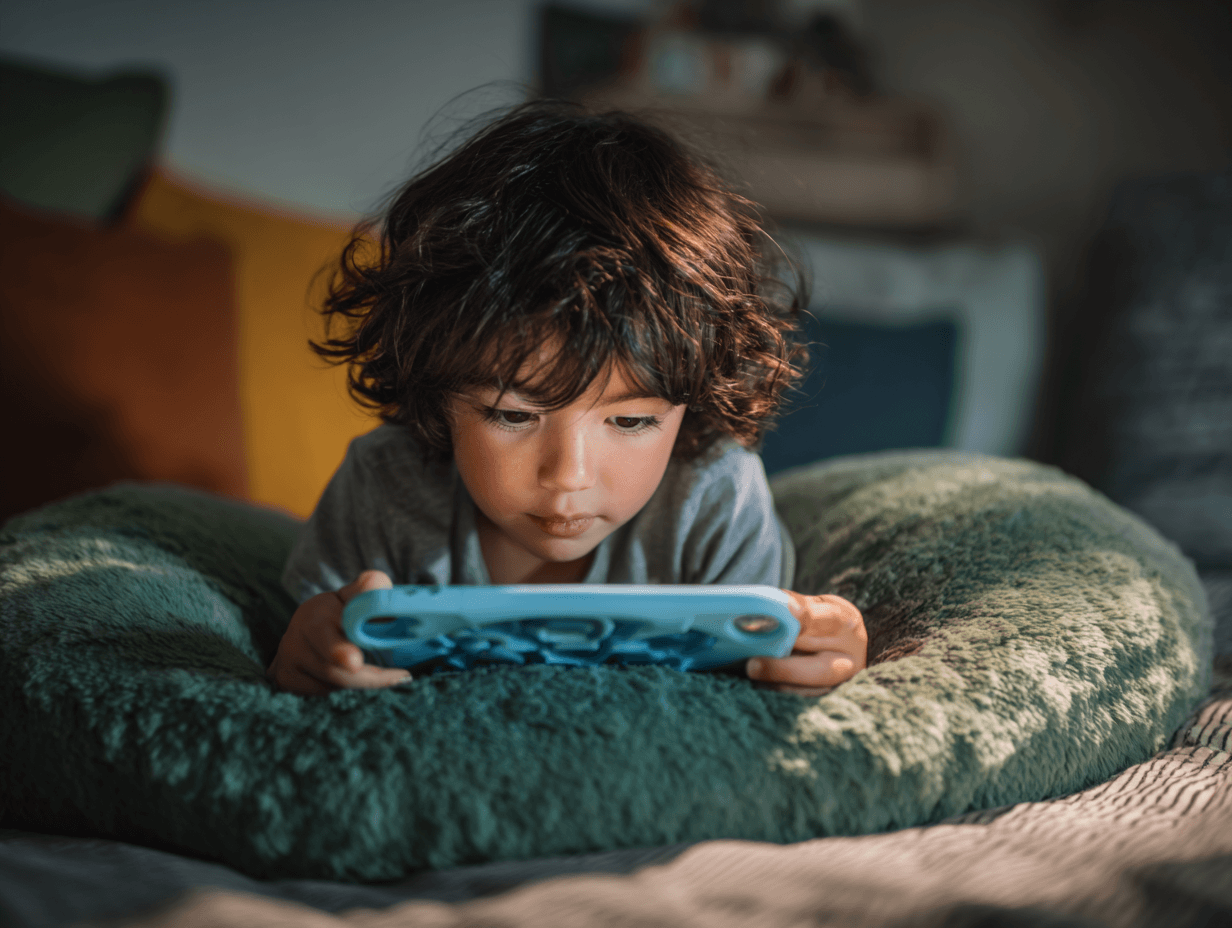
What the AAP Actually Says About Screen Time (And What to Do Instead)
If you've ever handed your toddler a tablet to get through a long car ride and felt a wave of parental guilt wash over you — this post is for you.
Screen time is one of those parenting topics that's gotten so charged, so hedged, and so moralized that most of what circulates online isn't actually that useful. Let's start with what the science actually says, and then talk about what it means in the real world.
What the AAP Actually Recommends
The American Academy of Pediatrics has updated its screen time guidance several times as research has evolved. Here's where they currently stand:
Under 18 months: Avoid screen use other than video chatting. The exception — video calling with family — makes sense developmentally. When a baby sees grandma on a screen, there's a real two-way interaction happening, which is meaningfully different from passive watching.
18–24 months: If you introduce screens, choose high-quality programming and watch it together. The "watch together" part matters: this is when you narrate, explain, and help your child connect what they're seeing to the real world. A show watched with a present parent is very different from the same show on a tablet in a corner.
2–5 years: Limit to one hour per day of high-quality programming. Again, co-viewing when possible.
6 and up: Consistent limits on time and type, with screen use not displacing sleep, physical activity, or in-person connection.
What "High Quality" Actually Means
Not all screen time is equal, and this is where the nuance matters. The AAP isn't just counting minutes — they're distinguishing between types of content and types of engagement.
High-quality programming for young children tends to be:
- Slow-paced (not rapid-fire editing and stimulation)
- Interactive or language-rich
- Educational in an age-appropriate way
- Designed with child development experts involved
Shows like Bluey, Sesame Street, Daniel Tiger, and Mister Rogers' Neighborhood consistently score well on these dimensions. Fast-paced YouTube content, algorithm-driven recommendation loops, and most "reaction" or unboxing content for kids score poorly.
Let's Talk About the Real World
Here's where we depart from the guidelines for a moment and just acknowledge something: sometimes screens are the thing that gets you through the day.
Long car trips. Flights. A sick day when your child has a fever and just wants to lie on the couch and watch something. A moment when you desperately need 20 uninterrupted minutes to make a phone call or cook dinner without someone clinging to your leg. These are real situations, and they're not emergencies. They're just parenting.
The research on screen time harm is largely about chronic, high-volume, unmediated use — not the occasional tactical deployment of Bluey. A 3-hour car trip where your toddler watches movies is not going to undo weeks of reading books, playing outside, and talking with you. Context matters.
What the AAP guidance is really trying to prevent is screens becoming the default: the thing that fills every quiet moment, replaces conversation, and crowds out the kinds of play and interaction that actually build language, attention, and social skills. That's a different problem from using screens as a crutch on hard days.
When Screens Are a Problem
It's worth knowing what to actually watch for:
Displacement. Is screen time consistently cutting into sleep, physical activity, or family meals? That's worth addressing.
Escalation. Is your child constantly asking for more, and struggling significantly to stop? That's a sign the habit has gotten ahead of you.
Passive isolation. Lots of time with screens alone, especially content that's fast-paced and stimulating with no interaction around it, is the pattern most associated with the outcomes researchers worry about.
Content quality. If most of what your child is watching is low-quality, algorithm-driven content rather than anything you'd actually choose for them, that's worth a reset.
Practical Alternatives (That Aren't Preachy About It)
If you want to reduce screen time without triggering a full meltdown, the key is replacement, not subtraction. You can't just take the iPad away — you have to offer something that fills the same need.
Virna helps with the replacement side of this. It suggests screen-free activities calibrated to your child's current developmental stage and interests — so when you take the tablet away and the meltdown starts, you're not staring at a blank wall trying to think of what else a 22-month-old might actually do.
For "I'm bored" moments: A rotating basket of simple materials — playdough, stickers, pipe cleaners, a magnifying glass — that comes out only when screens are off. Novelty is the thing.
For "I need you occupied" moments: Audiobooks and podcasts for kids are genuinely excellent. Wow in the World, Story Pirates, and Circle Round are all great. Your child gets a rich, engaging experience; you get your hands free.
For the car: Music playlists you build together, "I Spy" games, and simple audiobooks go a long way. Save the screen for when you actually need it — a long stretch, a meltdown, the last hour.
For sick days: Honestly, just let them watch TV. This is what screens were made for. A sick kid on the couch watching their favorite show is fine. You are not failing anyone.
The Bottom Line
Screen time is a tool. Like most tools, how you use it matters more than whether you use it. The goal isn't to eliminate screens — it's to be intentional about them, to choose quality over quantity where you can, and to make sure they're not crowding out the things that matter most.
And on the days when they absolutely are saving you? That's okay too. Tomorrow is a fresh start.
Virna can suggest screen-free activities and age-appropriate alternatives based on what your child is into right now.